
Two ways to cook beautifully. Here’s how to choose the right fit for your kitchen—and what to know before upgrading in an older home.
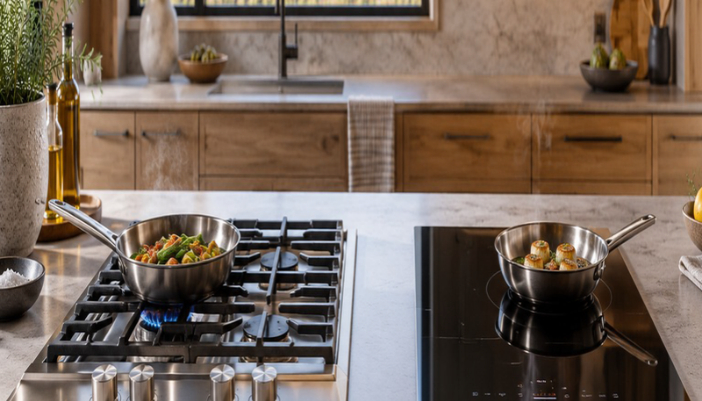
The Case for Gas
For cooks who love a visible flame, gas offers intuitive, immediate visual feedback and familiar control. It works with a wide range of cookware, and many serious home cooks appreciate the ability to char, toast, and move a pan directly through the flame. The trade-offs: burner grates and crevices take more effort to clean, and combustion adds pollutants to indoor air. A properly sized, vented range hood is important.
The Case for Induction
Induction uses an electromagnetic field to heat compatible cookware directly—so water boils quickly, temperature changes happen fast, and less heat spills into the room. The smooth glass surface is easy to wipe down, and the cooking zone generally stays cooler than a gas burner. Induction is also highly efficient. You will need magnetic-compatible pans; if a refrigerator magnet sticks firmly to the base, the pan will usually work.
The Older-Home Question: Electricity
In many older Bend and Central Oregon homes, a gas range may sit where no high-capacity electric circuit was ever installed. A full-size induction range or cooktop commonly needs a dedicated 240-volt circuit, often around 40–50 amps, but the exact requirement depends on the model. Moving from gas can mean new wiring and a suitable breaker—and sometimes a panel or service upgrade.
Before you buy, have a licensed electrician assess the panel’s capacity, available breaker spaces, existing wiring, and the appliance’s installation specifications. If you already have a 240-volt electric range circuit, it may be reusable, but that must be verified. Don’t assume a standard outlet is enough.
Which One Is Right for You?
Choose gas if you prefer flame-based cooking and already have a suitable gas connection and ventilation. Choose induction if speed, easy cleanup, energy efficiency, and a cooler cooking surface top your list—and your home can support the electrical requirements. Neither choice is one-size-fits-all; the right answer depends on how you cook and the home you have.
A Smart First Step:
Shortlist the appliance first, then confirm its exact electrical specifications with an electrician before finalizing cabinetry, counters, or installation plans.
Johnson Brothers Appliances
Helping Bend and Central Oregon homeowners make confident choices for the heart of the home.
Electrical requirements vary by appliance and home. Consult the manufacturer’s installation guide and a licensed electrician before purchasing or installing equipment.